
Calibration & Control
Auxiliary emissions functions
Configure secondary air injection and fuel-vapour purge functions used to support catalyst heating and evaporative-emissions control.
Secondary air injection
Secondary air injection (SAI) is used on supported applications during catalyst heating after a cold start. A pump supplies fresh air into the exhaust ports close to the exhaust valves so that additional oxidation can increase exhaust temperature and accelerate catalyst light-off.
An electrically operated one-way valve prevents exhaust gas flowing back towards the pump when exhaust back-pressure rises. The ECU controls both the pump relay and the air valve.
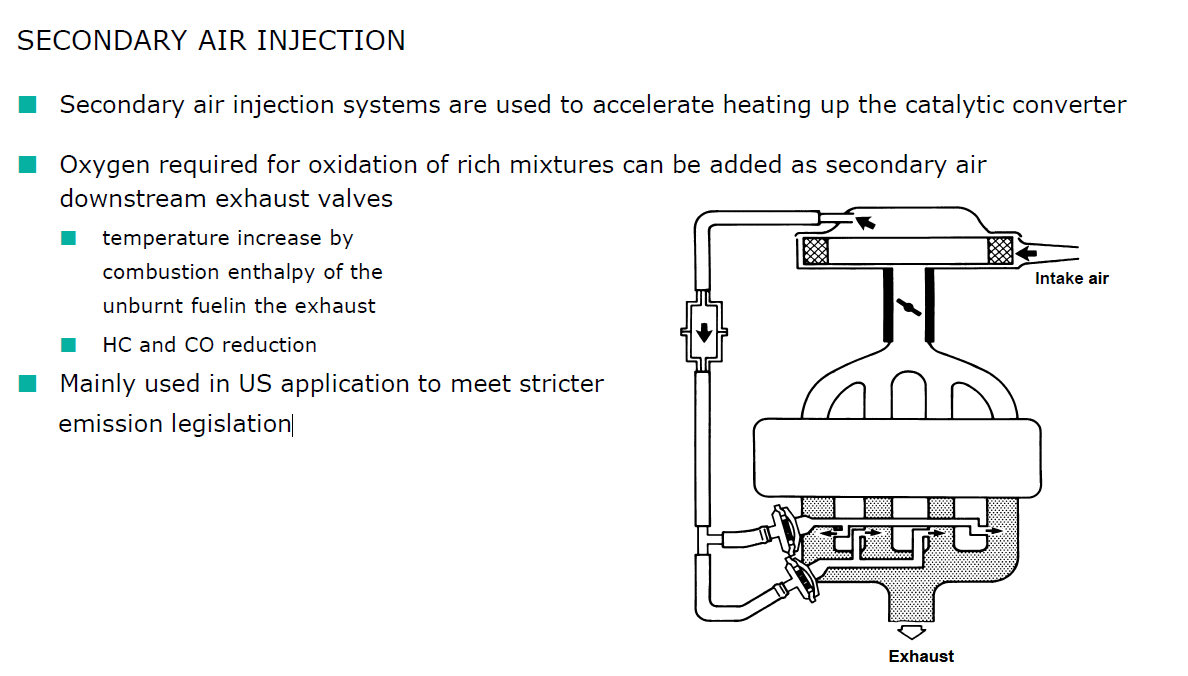
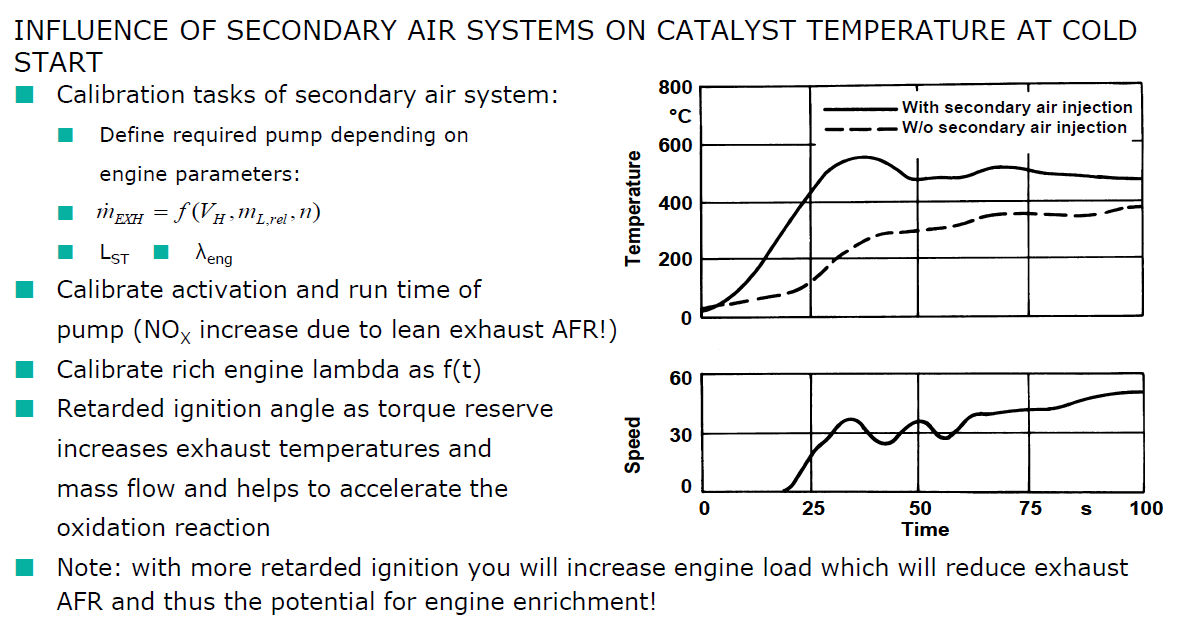
During secondary air injection the exhaust lambda is intentionally lean, so fuel control is operated open loop. Closed-loop lambda control starts after the SAI phase has ended.
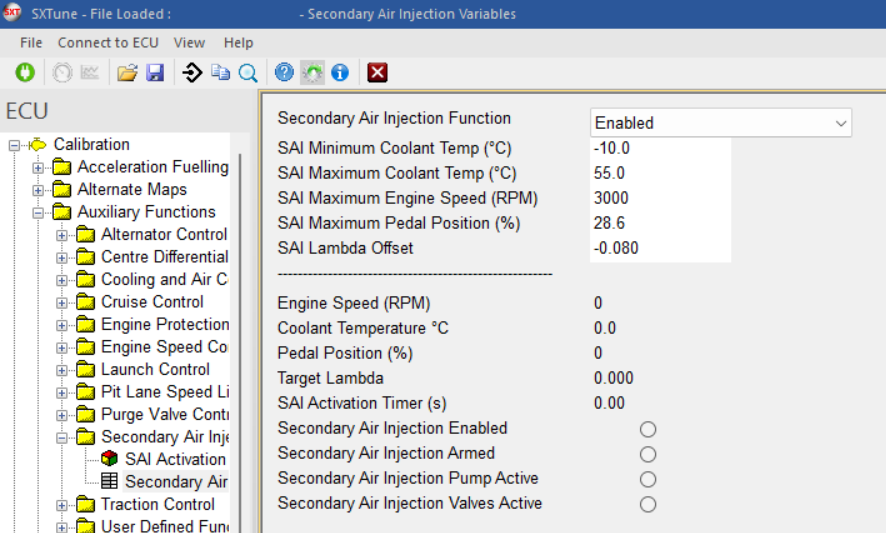
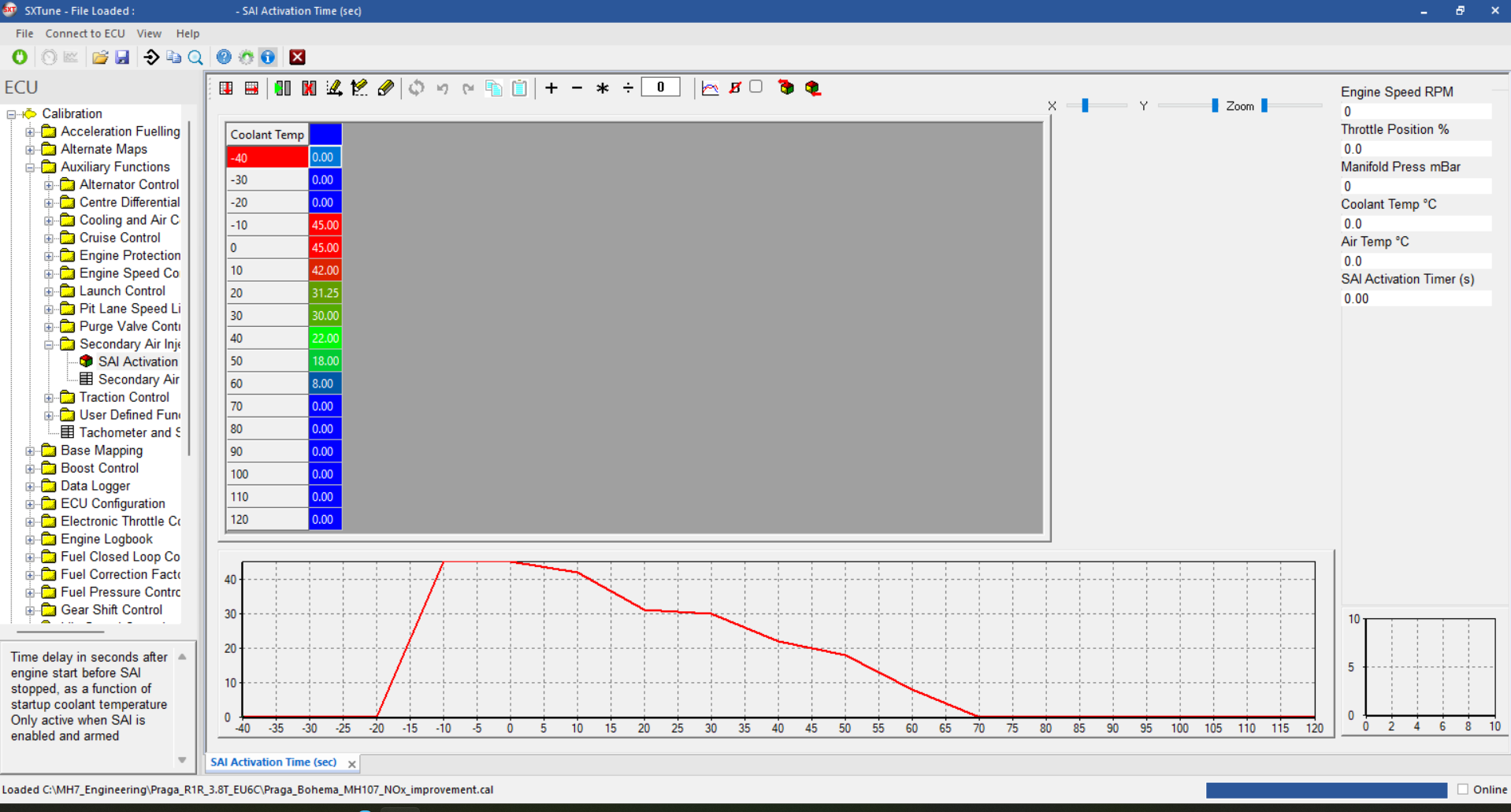
SAI is enabled only within a calibrated operating window where catalyst heating is required. It is disabled once the catalyst is hot to avoid overheating.
The function is also disabled above calibrated engine-speed and load limits where exhaust back-pressure could cause reverse flow towards the pump.
A calibrated fuel enrichment can be applied during SAI to increase the energy available for the secondary oxidation reaction and shorten catalyst warm-up time.
Purge control
Purge control meters fuel vapour from the activated-carbon canister into the engine when operating conditions allow it. The strategy uses closed-loop lambda correction as feedback so that vapour flow does not disturb normal fuelling control.
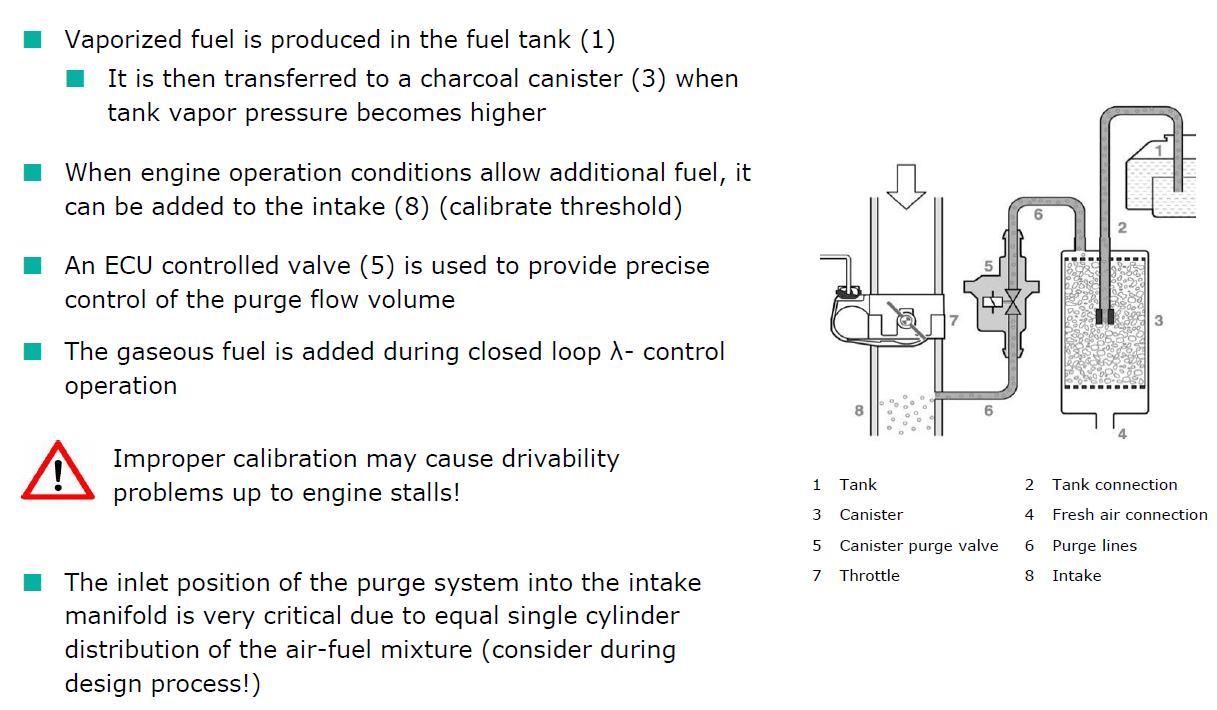
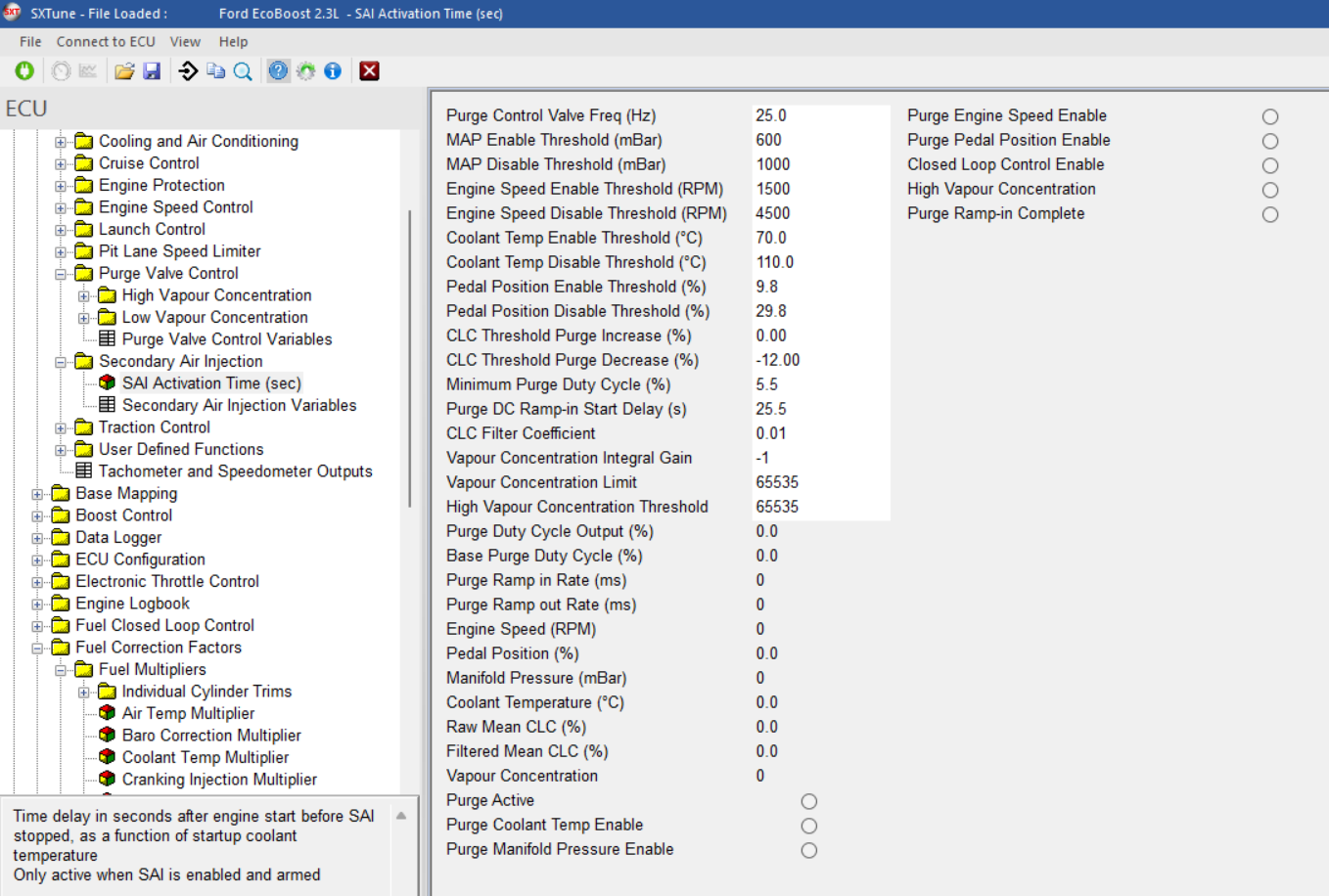
When closed-loop correction is close to neutral, the purge duty cycle is increased towards the value in the purge duty-cycle base map. If closed-loop correction exceeds the calibrated threshold, purge duty is reduced until fuelling correction returns within the permitted range.
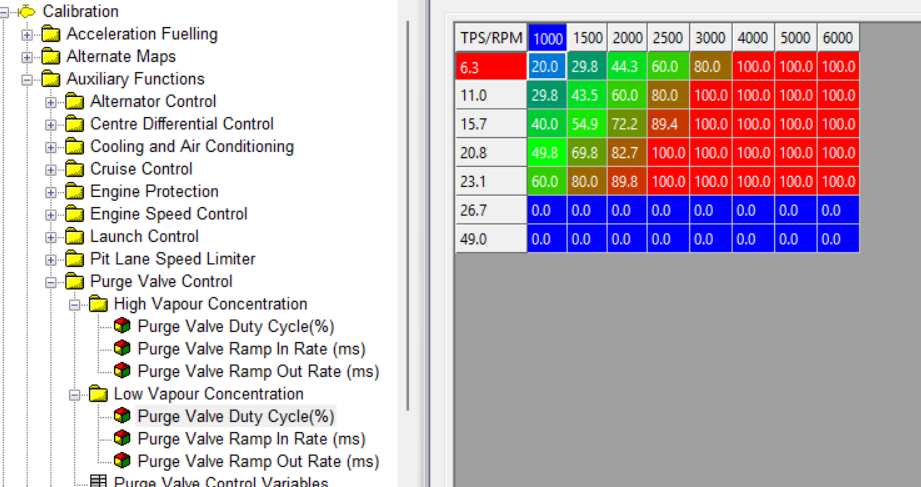
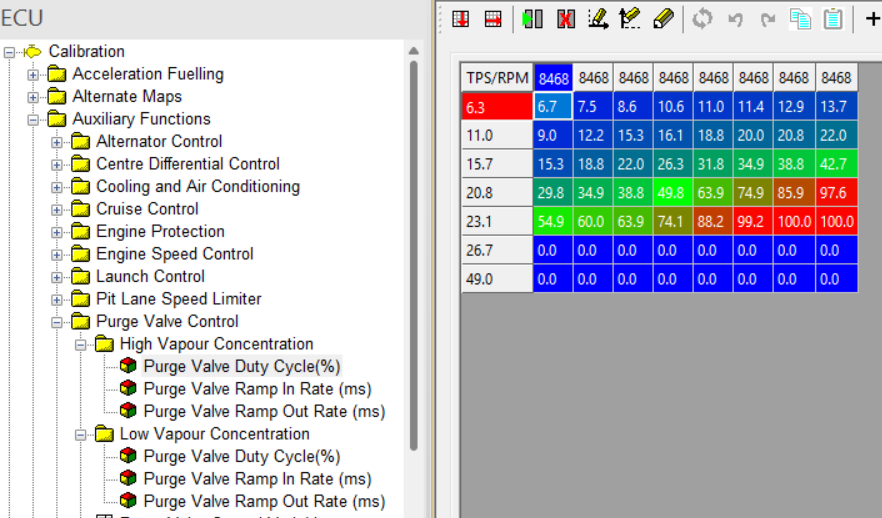
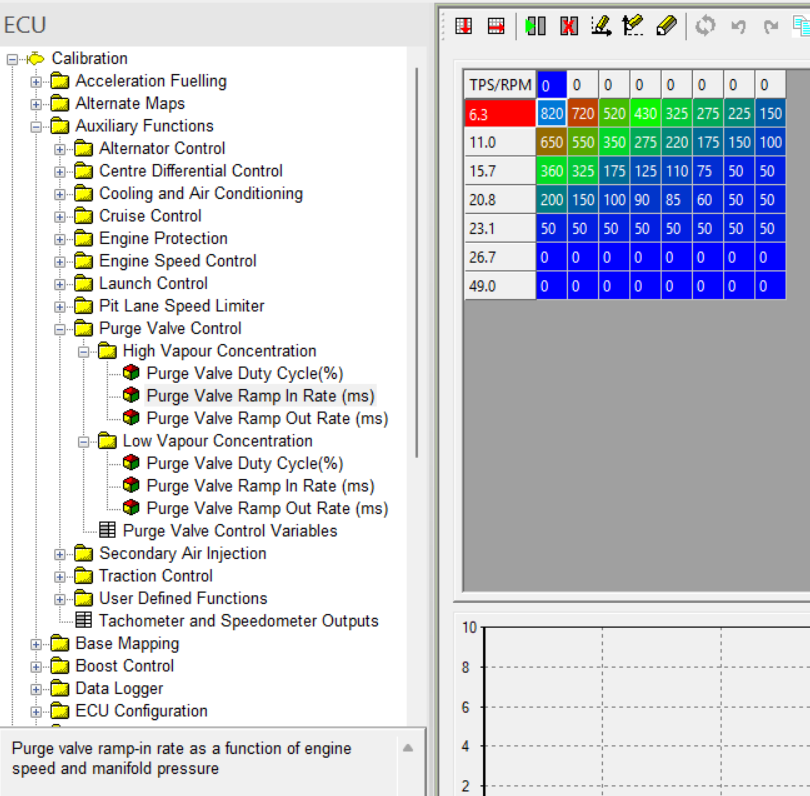
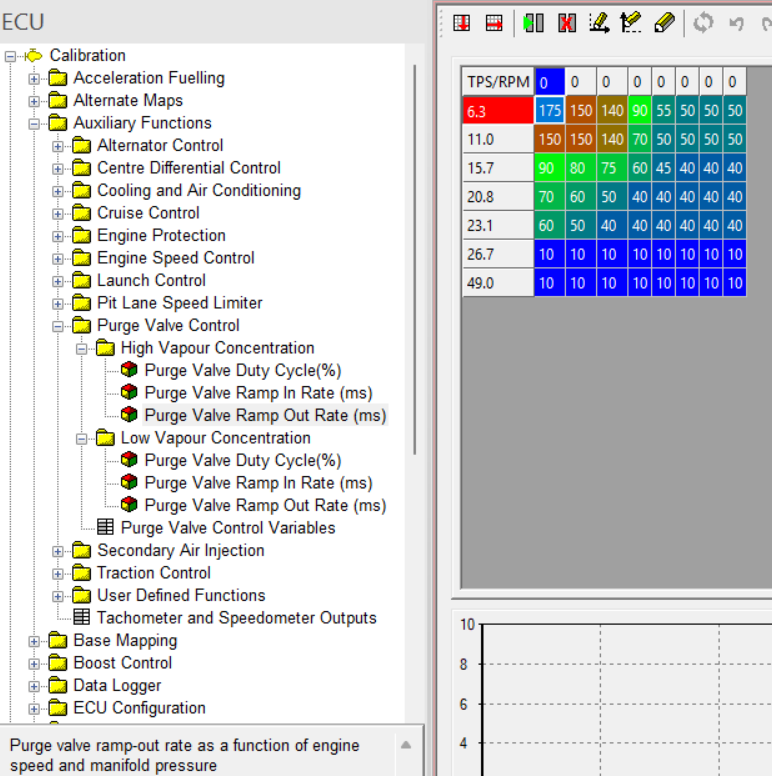
Ramp-up and ramp-down rates are calibrated separately and may also use different values for high- and low-vapour conditions.
If opening the purge valve repeatedly requires a significant enleanment correction from the closed-loop lambda controller, the strategy can identify a high vapour concentration in the canister and switch to the corresponding control maps. This allows purge flow to be reduced while continuing to clear the canister without upsetting lambda control.